

In modern manufacturing, product development speed and flexibility are becoming increasingly important. Companies need reliable manufacturing methods that allow them to test new designs, improve products, and produce customized components without investing in expensive tooling. This is where CNC Machining Service for prototyping and low volume production becomes an effective solution.
A professional CNC Machining service allows engineers and manufacturers to transform digital designs into physical components with high accuracy. Whether developing a new product prototype or producing a limited quantity of industrial parts, CNC Machining Service provides excellent flexibility, precision, and efficiency.
Unlike traditional manufacturing methods that often require complex molds and long preparation periods, CNC machining service can quickly produce customized parts directly from CAD designs. This makes CNC machining especially valuable for industries that require rapid development, functional testing, and small batch manufacturing.
The combination of CNC machining service, prototype manufacturing, and low volume production helps businesses reduce development time, improve product quality, and respond quickly to changing market requirements.
What Is CNC Machining Service?
A CNC machining service is a manufacturing process that uses computer-controlled machines to remove material from a workpiece and create precise components. CNC stands for Computer Numerical Control, meaning Machining equipment operates according to programmed instructions.
The main purpose of a CNC machining service is to produce accurate parts based on engineering drawings, CAD models, or digital design files.
A typical CNC machining service includes:
CNC drilling
CNC cutting
Surface finishing
Precision inspection
Prototype production
Low volume production
The CNC machining process provides excellent repeatability and dimensional accuracy, making it suitable for industries requiring customized parts and reliable manufacturing performance.
Why CNC Machining Service Is Ideal for Prototyping
Prototype development is an important stage in product design. Before moving into full production, engineers need physical samples to evaluate design performance, assembly conditions, and product functionality.
A CNC Machining Service for Prototyping provides a fast and effective way to create functional prototypes.
One of the biggest advantages of CNC prototyping is speed.
With a digital CAD model, a CNC machining service can quickly manufacture prototype parts without requiring complicated mold production.
This allows engineers to:
Test product concepts
Verify mechanical designs
Identify potential problems
Improve product structures
Fast prototype manufacturing helps shorten product development cycles.
Unlike visual models created through simple methods, CNC machined prototypes are made from real engineering materials.
This means prototypes can be tested under actual working conditions.
Engineers can evaluate:
Strength
Durability
Assembly accuracy
Mechanical performance
Surface quality
A CNC machining service provides prototypes that closely represent final production components.
During product development, design changes are often necessary.
With CNC machining service, engineers can easily modify digital drawings and produce updated prototypes.
This flexibility allows companies to improve products before final production begins.

CNC Machining Service for Low Volume Production
Low volume production refers to manufacturing a limited quantity of parts, usually before large-scale production or for specialized industrial applications.
A CNC machining service for low volume production provides manufacturers with an efficient solution when they need customized parts without high production quantities.
Low Volume Machining is commonly used for:
New product launches
Specialized equipment
Replacement parts
Customized components
Industrial testing
Advantages of CNC Machining Service for Low Volume Production
Traditional manufacturing methods often require expensive molds and tooling. For small quantities, these costs may not be economical.
A CNC machining service eliminates the need for dedicated molds in many applications.
This reduces:
Initial investment
Production preparation time
Development costs
CNC Machining Supports different production volumes.
Whether producing several prototype parts or hundreds of customized components, CNC machining service can adapt to different manufacturing requirements.
This flexibility is especially useful for companies developing new products or serving specialized markets.
Even in low volume production, part accuracy remains important.
A professional CNC machining service uses programmed machining operations to ensure consistent results across different batches.
This helps maintain:
Dimensional accuracy
Assembly compatibility
Product reliability
CNC Machining Processes Used for Prototyping and Low Volume Production
A complete CNC machining service may include several machining methods depending on part requirements.
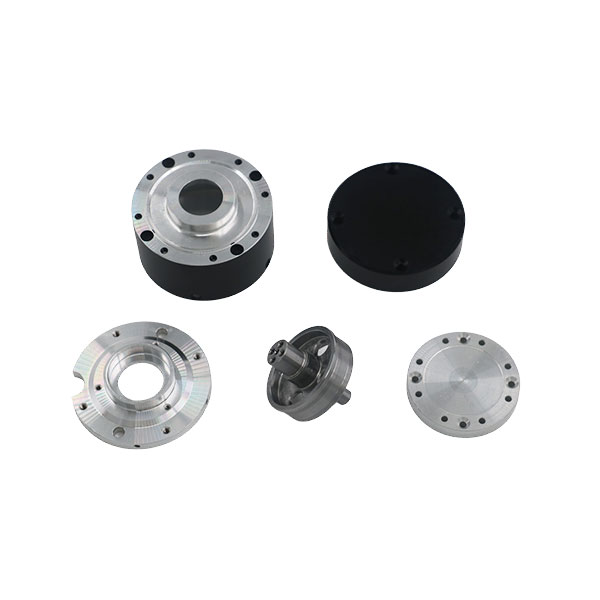
CNC milling is one of the most commonly used processes in prototype manufacturing and low volume production.
During CNC milling, rotating cutting tools remove material from a workpiece to create the required shape.
CNC milling can produce:
Flat surfaces
Slots
Complex contours
Precision holes
Detailed structures
This process is suitable for producing complex prototype parts and customized industrial components.
CNC Turning Service
CNC turning is mainly used for cylindrical components.
During CNC turning, the workpiece rotates while cutting tools remove material.
Typical CNC turning applications include:
Shafts
Bushings
Connectors
Cylindrical mechanical parts
CNC turning provides excellent dimensional control for low volume production components.
CNC Drilling and Secondary Operations
CNC drilling creates accurate holes and openings in machined parts.
Secondary operations may include:
Threading
Grinding
Polishing
Surface treatment
These additional processes improve the functionality and appearance of CNC machined components.
Materials Used in CNC Machining Service
Material selection is an important part of CNC machining service for prototyping and low volume production.
Different materials provide different performance characteristics.
Aluminum is widely used because it is lightweight, corrosion-resistant, and easy to machine.
It is commonly selected for prototypes requiring good strength and reduced weight.
Stainless steel provides excellent strength and corrosion resistance.
It is suitable for industrial parts requiring durability and long service life.
Carbon steel offers good mechanical properties and is commonly used for structural components.
Copper provides excellent electrical and thermal conductivity.
It is often used for electrical and industrial applications.
Engineering plastics are suitable for lightweight components requiring insulation, chemical resistance, or wear resistance.
Quality Control in CNC Machining Service
Quality control is essential in CNC machining service because prototype parts and low volume production components must meet accurate design requirements.
A Professional CNC Machining service typically includes:
Dimensional inspection verifies whether parts match engineering drawings.
Surface inspection checks finishing quality and appearance.
Tolerance testing ensures manufacturing accuracy.
Functional testing confirms whether parts perform correctly in practical applications.
Effective quality control helps ensure reliable CNC machining results.

Industries Using CNC Machining Service for Prototyping and Low Volume Production
Automotive manufacturers use CNC machining service for developing prototype components, testing designs, and producing customized mechanical parts.
Applications include:
Engine components
Fixtures
Mechanical assemblies
Special parts
Aerospace development requires accurate and lightweight components.
CNC machining service helps produce prototype parts and low volume Aerospace Components with reliable performance.
Medical equipment requires precise and dependable parts.
CNC machining service supports the production of medical device components, testing parts, and customized equipment components.
Automation equipment often requires customized mechanical structures.
CNC machining service provides accurate parts for robots, machines, and automated systems.
How CNC Machining Service Reduces Product Development Risks
Product development involves many uncertainties. CNC machining service helps reduce risks by allowing engineers to test and improve designs before final manufacturing.
Benefits include:
Early design verification
Faster product improvement
Reduced manufacturing problems
Better understanding of product performance
Through prototype testing and low volume production, companies can make better decisions before large-scale manufacturing.
How to Choose a Reliable CNC Machining Service Provider
When selecting a CNC machining service, businesses should evaluate several factors.
Check whether the CNC machining service can handle required materials, part sizes, and production requirements.
Experienced machining teams can provide better manufacturing solutions.
A complete inspection process ensures consistent part quality.
A suitable CNC machining service should support prototypes, low volume production, and customized manufacturing needs.
Future Development of CNC Machining Service
The future of CNC machining service will continue moving toward smarter, faster, and more automated manufacturing.
Future trends include:
Intelligent CNC systems
Automated production processes
Digital manufacturing technology
Improved machining accuracy
Faster prototype development
These developments will further improve the ability of CNC machining service providers to support product innovation and industrial production.
Conclusion
A CNC machining service for prototyping and low volume production provides an efficient solution for companies that need accurate, flexible, and reliable manufacturing support.
From prototype development to customized small batch production, CNC machining service helps businesses create functional components, test designs, and improve products before full production.
With advantages including high precision, flexible quantities, fast development, and excellent material compatibility, CNC machining service has become an important manufacturing method for modern industries.
For companies seeking efficient product development and reliable component manufacturing, choosing the right CNC machining service can provide significant advantages throughout the entire production process.
This website uses cookies to ensure you get the best experience on our website.
 Español
 Pусский
 العربية
 Tiếng Việt



 Phone
Phone
Comment
(0)