

When choosing a suitable Machining Service for Custom Parts Manufacturing, one of the most common questions is the difference between CNC Milling vs CNC Turning. Both CNC milling and CNC turning are advanced machining methods that use computer-controlled equipment to produce accurate components, but they are designed for different types of parts and manufacturing requirements.
Selecting the correct machining service can directly affect product quality, production efficiency, cost control, and manufacturing results. Understanding the differences between CNC milling vs CNC turning helps engineers and manufacturers choose the most suitable process for their projects.
Both CNC milling and CNC turning offer high precision, repeatable production, and excellent flexibility. However, the working principles, suitable part designs, and applications are different.
This guide explains the key differences between CNC milling vs CNC turning, including their processes, advantages, applications, materials, and how to choose the right machining service for your project.
What Is CNC Machining Service?
Before comparing CNC milling vs CNC turning, it is important to understand what a CNC Machining service means.
A CNC machining service is a manufacturing process that uses computer-controlled machines to remove material from a workpiece and create customized components according to digital designs.
The CNC machining process typically includes:
CAD design preparation
CNC programming
Material selection
Machining operations
Surface finishing
Quality inspection
A professional CNC machining service can produce prototypes, customized components, and production parts for various industries.
The two most common CNC machining methods are:
CNC milling
CNC turning
Although both belong to CNC machining, the working methods are different.
What Is CNC Milling?
CNC milling is a machining process where rotating cutting tools remove material from a stationary workpiece.
During CNC milling, the cutting tool moves along multiple axes to create different shapes, surfaces, and features.
The movement of the cutting tool is controlled by CNC programming, allowing manufacturers to produce complex components with high accuracy.
How CNC Milling Works
The CNC milling process generally includes:
Engineers create a CAD model based on the required component design.
The CAD data is converted into machine instructions.
The material is fixed onto the CNC milling machine.
Rotating cutting tools remove material to create the required shape.
Finished parts are checked for accuracy and quality.
Advantages of CNC Milling Service
CNC milling service provides several important benefits.
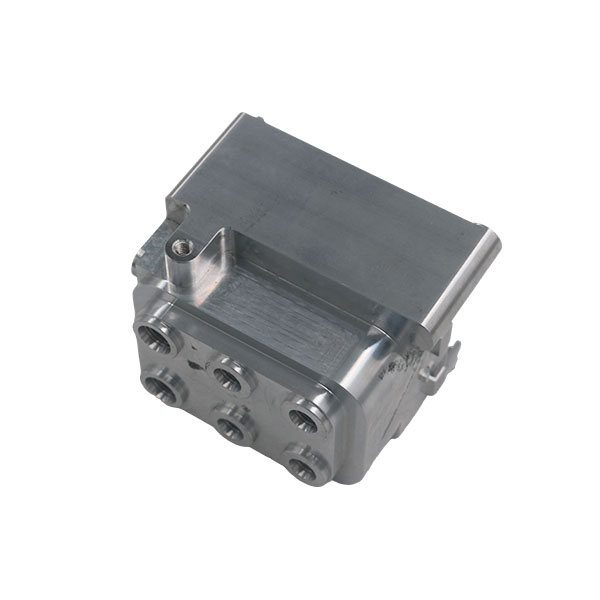
One of the biggest advantages of CNC milling is the ability to produce complex geometries.
CNC milling can create:
Slots
Holes
Curved surfaces
Pockets
Detailed structures
This makes CNC milling suitable for parts with complicated designs.
Advanced CNC milling machines can process multiple surfaces of a component.
This reduces the need for multiple setups and improves machining efficiency.
CNC milling provides excellent dimensional accuracy, making it suitable for precision components.
What Is CNC Turning?
CNC turning is a machining process where the workpiece rotates while cutting tools remove material.
Unlike CNC milling, where the tool rotates around the material, CNC turning rotates the workpiece itself.
CNC turning is mainly used for producing cylindrical or round components.
How CNC Turning Works
The CNC turning process includes:
The workpiece is fixed onto the CNC turning machine.
Machining instructions are created according to the part design.
The material rotates at controlled speed.
Cutting tools remove material to achieve the required dimensions.
Finished components are inspected for accuracy.
Advantages of CNC Turning Service
CNC turning service offers unique benefits for specific applications.
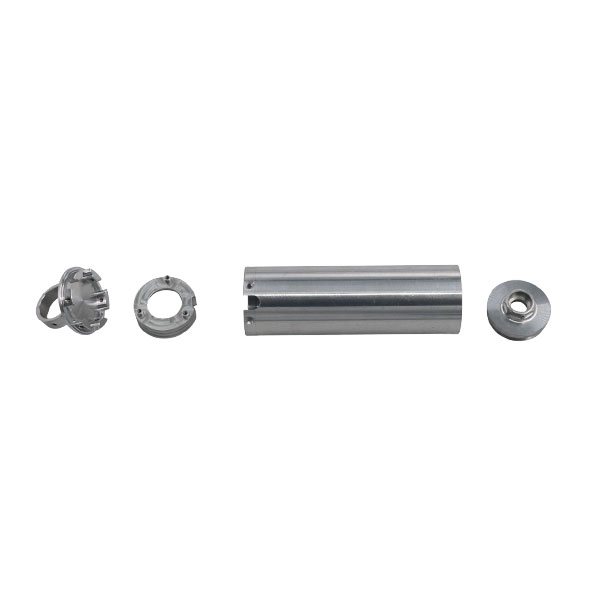
CNC turning is highly effective for producing round components.
Common CNC turning parts include:
Shafts
Bushings
Sleeves
Connectors
Pins
Because the workpiece rotates during machining, CNC turning provides excellent control over diameter dimensions.
For cylindrical components, CNC turning can provide fast and stable production performance.
CNC Milling vs CNC Turning: Main Differences
Understanding the differences between CNC milling vs CNC turning helps determine which machining service is suitable for specific projects.
1. Working Principle Difference
The main difference between CNC milling vs CNC turning is how material movement occurs.
Workpiece remains stationary
Cutting tool rotates
Tool moves along multiple axes
Workpiece rotates
Cutting tool remains fixed
Mainly used for round components
2. Part Shape Difference
Another important difference in CNC milling vs CNC turning is the type of parts they produce.
CNC milling is suitable for:
Complex shapes
Flat surfaces
Irregular components
Multi-feature parts
CNC turning is suitable for:
Cylindrical parts
Round shafts
Rotating components
Symmetrical designs
3. Design Complexity Difference
When comparing CNC milling vs CNC turning, design complexity is an important factor.
CNC milling provides greater flexibility for complex designs because it can create multiple features on different surfaces.
CNC turning is more efficient for simple rotational designs.
4. Production Volume Difference
Both CNC milling and CNC turning can support different production requirements.
Suitable for:
Prototypes
Small batches
Complex custom parts
Suitable for:
Repeated cylindrical components
Production parts
High-efficiency manufacturing
CNC Milling vs CNC Turning: Material Compatibility
Both CNC milling and CNC turning can process many different materials.
Common materials include:
Aluminum is widely used because of its lightweight properties and excellent machinability.
Applications include:
Automotive parts
Electronic housings
Stainless steel provides excellent strength and corrosion resistance.
Applications include:
Industrial components
Medical parts
Mechanical structures
Carbon steel offers strong mechanical performance.
Applications include:
Machine parts
Structural components
Engineering plastics provide lightweight and special performance characteristics.
Applications include:
Insulation parts
Precision components
Applications of CNC Milling Service
CNC milling service is widely used in many industries.
Aerospace Applications
Aerospace components often require complex structures and high accuracy.
CNC milling is used for:
Structural components
Precision fixtures
Lightweight parts

Automotive Applications
The automotive industry uses CNC milling for:
Prototype components
Mechanical parts
Custom fixtures
Automation Applications
Automation equipment requires accurate mechanical components.
CNC milling helps produce:
Machine structures
Precision brackets
Custom parts
Applications of CNC Turning Service
CNC turning service is commonly used for parts requiring rotational accuracy.
Mechanical Components
CNC turning is suitable for:
Shafts
Bushings
Connectors
Automotive applications include:
Rotating parts
Transmission components
Mechanical fittings
Industrial Equipment
Industrial equipment often requires cylindrical precision components manufactured through CNC turning.
How to Choose Between CNC Milling vs CNC Turning
Choosing between CNC milling vs CNC turning depends on several project factors.
Consider Part Geometry
If the part has complex surfaces and multiple features, CNC milling may be more suitable.
If the part is cylindrical, CNC turning may provide better efficiency.
Consider Production Requirements
For customized complex parts, CNC milling may provide greater flexibility.
For repeated round components, CNC turning may be more efficient.
Consider Accuracy Requirements
Both CNC milling and CNC turning provide high precision, but the best choice depends on the specific design requirements.
Consider Manufacturing Cost
The most suitable machining service should balance:
Material usage
Processing time
Production quantity
Part complexity
Combining CNC Milling and CNC Turning
In some projects, the best solution is not choosing between CNC milling vs CNC turning, but combining both processes.
Many complex components require:
Turning operations for cylindrical features
Milling operations for additional structures
Combining CNC milling and CNC turning provides greater manufacturing flexibility and improved part quality.
Future Development of CNC Machining Service
The future of CNC machining service will continue moving toward smarter and more efficient manufacturing.
Future trends include:
Automated machining systems
Multi-axis CNC technology
Digital production management
Improved machining accuracy
These developments will further improve both CNC milling and CNC turning capabilities.
Conclusion: Choosing the Right Machining Service
When comparing CNC milling vs CNC turning, there is no single machining method that is best for every project. The right choice depends on part design, material requirements, production quantity, and application needs.
CNC milling is ideal for complex shapes, multiple surfaces, and detailed components. CNC turning is suitable for cylindrical parts requiring excellent dimensional control.
By understanding the differences between CNC milling vs CNC turning, manufacturers can select the right machining service to achieve accurate, efficient, and reliable custom parts production.
Whether choosing CNC milling, CNC turning, or a combination of both, a suitable CNC machining service can help improve product quality and manufacturing performance.
This website uses cookies to ensure you get the best experience on our website.
 Español
 Pусский
 العربية
 Tiếng Việt



 Phone
Phone
Comment
(0)