

CNC Machining Service is an advanced manufacturing solution that uses computer-controlled machines to produce accurate and complex industrial parts. CNC Machining has become an important production method in modern manufacturing because it provides high precision, repeatability, efficiency, and flexibility for different industrial applications.
In traditional machining methods, operators manually control cutting tools to shape materials. However, CNC machining uses programmed instructions to automatically control machine movements. This allows CNC Machining Service providers to manufacture industrial parts with strict dimensional accuracy and consistent quality.
Today, CNC machining service is widely used for Automotive Components, aerospace parts, Medical Equipment components, automation systems, electronic parts, and various mechanical products. With the development of manufacturing technology, CNC machining has become a key process for companies that require reliable industrial parts production.
Understanding how CNC machining service works can help engineers, designers, and manufacturers select suitable machining solutions for their projects.
What Is CNC Machining Service?
CNC machining service refers to a manufacturing process where computer numerical control technology is used to operate Machining equipment. The CNC machining process removes material from a workpiece through cutting, drilling, milling, turning, and other operations to create a finished industrial part.
The main purpose of CNC machining service is to transform raw materials into precise components according to engineering drawings or digital models. CNC machining can process different materials, including aluminum, stainless steel, carbon steel, copper, titanium, engineering plastics, and other industrial materials.
A Professional CNC Machining service usually includes:
CNC drilling
CNC grinding
Surface finishing
Precision inspection
Prototype manufacturing
Low-volume and mass production
Compared with conventional machining, CNC machining provides better accuracy and production stability. The CNC machining process reduces human errors and allows manufacturers to produce complex industrial parts with consistent performance.
How Does CNC Machining Work?
The CNC machining process includes several important steps. Each step affects the final quality, accuracy, and performance of industrial parts.
The first step of CNC machining service is creating a digital design. Engineers usually use CAD software to develop a 3D model or technical drawing of the required industrial parts.
The CAD model contains important information such as:
Part dimensions
Geometric structure
Material requirements
Surface finish requirements
Manufacturing tolerances
After completing the design, the CAD file is converted into CNC programming instructions.
CNC programming controls how the CNC machine performs machining operations. Engineers create CNC programs based on the product design and machining requirements.
The CNC program defines:
Cutting paths
Tool movement direction
Cutting speed
Feed rate
Machining sequence
Accurate CNC programming ensures that the CNC machining service can produce industrial parts according to design specifications.
Modern CNC machining technology allows complex programs to control multiple machining axes, making it possible to manufacture parts with complicated structures and precise features.
Material selection is an important part of CNC machining service. Different industrial parts require different materials depending on strength, temperature resistance, corrosion resistance, and application environment.
Common CNC Machining Materials include:
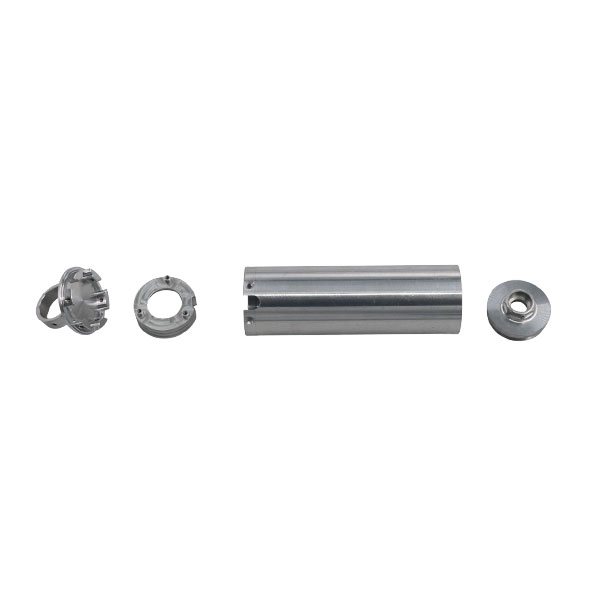
Aluminum is widely used in CNC machining because it is lightweight, corrosion-resistant, and easy to process. Aluminum CNC machining is commonly used for aerospace parts, electronic components, and automation equipment.
Stainless steel provides excellent strength and corrosion resistance. CNC machining of stainless steel is suitable for industrial equipment, medical components, and mechanical structures.
Copper offers excellent electrical conductivity and thermal performance, making it suitable for electrical and electronic industrial parts.
Engineering plastics are used when lightweight, insulation, and chemical resistance are required.
Choosing the correct material helps improve the durability and performance of CNC machined industrial parts.
Main CNC Machining Processes
CNC machining service includes several machining methods designed for different industrial parts requirements.
CNC milling is one of the most common CNC machining processes. It uses rotating cutting tools to remove material from a workpiece.
CNC milling can create:
Flat surfaces
Slots
Holes
Complex shapes
Precision contours
CNC milling is widely used for producing industrial parts with complex geometries.
CNC turning uses a rotating workpiece and stationary cutting tools to create cylindrical components.
CNC turning is suitable for manufacturing:
Shafts
Bushings
Screws
Cylindrical components
This CNC machining method provides excellent dimensional accuracy for round industrial parts.
CNC drilling creates accurate holes in industrial parts. It is often combined with CNC milling and turning operations to complete complex components.
Precision CNC drilling ensures correct hole positioning and reliable assembly performance.
Some industrial parts require extremely smooth surfaces and tight tolerances. CNC grinding and surface finishing processes improve surface quality and functional performance.
Common finishing options include:
Polishing
Anodizing
Coating
Sandblasting
Heat treatment
These processes enhance the appearance, durability, and service life of CNC machined parts.
Advantages of CNC Machining Service for Industrial Parts Production
One of the biggest advantages of CNC machining service is high accuracy. CNC machines follow programmed instructions, allowing manufacturers to produce industrial parts with consistent dimensions.
Precision CNC Machining is especially important for industries that require strict tolerances and reliable performance.
CNC machining improves Manufacturing Efficiency by reducing manual operations and increasing production speed.
Once CNC programs are prepared, machines can repeatedly produce the same industrial parts with stable quality.
This makes CNC machining suitable for prototype production, small batches, and large-scale manufacturing.
CNC machining can create complex industrial parts that are difficult to manufacture using traditional methods.
Multi-axis CNC machining allows cutting tools to reach different angles and produce detailed structures.
This capability makes CNC machining valuable for advanced industrial applications.
CNC machining service provides flexible manufacturing options. Companies can produce customized industrial parts without creating expensive molds or special tooling.
This flexibility is useful for product development, testing, and customized equipment manufacturing.

Applications of CNC Machining Service
CNC machining service is used across many industries because of its accuracy and reliability.
In Automotive Manufacturing, CNC machining produces engine components, transmission parts, brackets, and precision mechanical components.
The CNC machining process helps automotive manufacturers achieve reliable performance and consistent production quality.
Aerospace Components require strict precision standards. CNC machining is commonly used for aircraft structures, lightweight components, and complex aerospace parts.
High-precision CNC machining helps meet demanding Aerospace Manufacturing requirements.
Medical equipment requires accurate and reliable components. CNC machining service produces surgical instruments, medical device parts, and precision equipment components.
Automation systems require many precision industrial parts. CNC Machining Supports the production of robot components, machine parts, fixtures, and customized automation equipment.
Factors Affecting CNC Machining Quality
The quality of CNC machining depends on several factors.
Advanced CNC equipment improves machining accuracy and production efficiency.
Correct CNC programming ensures proper tool movement and reduces manufacturing errors.
Suitable materials improve the strength and reliability of industrial parts.
Professional inspection methods ensure CNC machined parts meet design requirements.
Common inspection methods include:
Dimensional measurement
Surface inspection
Tolerance verification
Functional testing
CNC Machining Service for Prototype and Production Manufacturing
CNC machining service is suitable for both prototype development and production manufacturing.
For prototypes, CNC machining allows engineers to quickly create functional samples for testing and improvement.
For production manufacturing, CNC machining provides stable quality and repeatable results.
This flexibility makes CNC machining an important manufacturing solution for companies developing new products and improving existing designs.
How to Choose the Right CNC Machining Service
When selecting a CNC machining service, manufacturers should consider several important factors:
Check whether the CNC machining service can handle required materials, part sizes, and production requirements.
A reliable CNC machining process should provide accurate dimensions and consistent quality.
Experienced CNC machining providers understand different industrial applications and can offer suitable production solutions.
A complete quality control system helps ensure every CNC machined part meets customer requirements.
Future Development of CNC Machining Technology
CNC machining technology continues to develop with automation, digital manufacturing, and intelligent production systems.
Future CNC machining trends include:
Automated production lines
Smart CNC machines
Real-time monitoring
Improved machining efficiency
Advanced precision control
These developments will continue improving CNC machining service capabilities and expanding industrial parts production applications.
Conclusion
CNC machining service is an essential manufacturing solution for producing accurate, reliable, and complex industrial parts. Through computer-controlled machining processes, CNC machining provides excellent precision, production efficiency, and flexible manufacturing options.
From design preparation and CNC programming to material selection, machining operations, and quality inspection, every stage of CNC machining affects the final product performance.
For modern industrial parts production, CNC machining service provides a dependable way to manufacture customized components for automotive, aerospace, medical, automation, and other industries. As manufacturing technology continues to advance, CNC machining will remain an important method for precision industrial production.
This website uses cookies to ensure you get the best experience on our website.
 Español
 Pусский
 العربية
 Tiếng Việt



 Phone
Phone
Comment
(0)