
 Español
 Pусский
 العربية
 Tiếng Việt
Humanoid robot joint motor
A humanoid robot joint motor is a compact and highly specialized electromechanical device designed to drive the movement of a robot’s limbs and body segments. It serves as the core actuation component in each joint, converting electrical energy into precise rotational motion. Because humanoid robots are built to imitate the flexibility and coordination of human movement, the joint motor must deliver high torque, accurate positioning, fast response, and smooth motion in a limited installation space.One of the most important features of a humanoid robot joint motor is its ability to generate sufficient torque while remaining lightweight and compact. Humanoid robots often have many joints in the shoulders, elbows, hips, knees, wrists, and ankles, so every motor must balance power and size carefully. A motor that is too heavy will reduce mobility and increase energy consumption, while one that is too weak will limit the robot’s ability to lift, walk, grasp, or stabilize itself. For this reason, joint motors are usually engineered with optimized magnetic circuits, efficient winding structures, and high-performance materials to maximize output density.Precision is another critical requirement. Humanoid robots need to perform delicate and coordinated actions such as walking on uneven ground, turning the head, reaching for objects, or maintaining balance. The joint motor must respond accurately to control signals from the robot’s control system and maintain stable motion under varying loads. High-resolution feedback devices are often paired with the motor to monitor position, speed, and torque in real time. This enables closed-loop control, improving movement accuracy and reducing vibration or overshoot.Durability and reliability are also essential. Joint motors in humanoid robots are subjected to repeated start-stop cycles, dynamic loads, and long periods of operation. They must withstand mechanical stress, heat generation, and continuous motion without significant wear or performance loss. Good thermal management is therefore important, as excessive heat can reduce efficiency and shorten service life. Many designs use advanced cooling paths, low-friction components, and robust housings to improve endurance.In addition, humanoid robot joint motors must support quiet and smooth operation. Since these robots are often intended to work in human environments, noise reduction and fluid motion are important for safety and comfort. A well-designed motor can help the robot move naturally, almost like a human joint, which improves both appearance and functionality.Overall, a humanoid robot joint motor is a key enabling technology for intelligent motion. It combines high torque density, precision control, compact structure, and long-term reliability to support the complex demands of human-like robotics. As robot applications continue to expand in service, research, industry, and daily life, the development of better joint motors will remain central to achieving more capable and natural humanoid movement.
Products
Category:
-
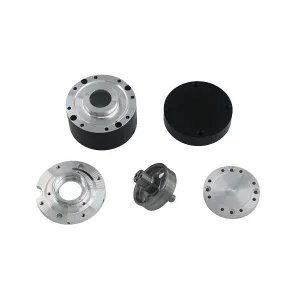
Humanoid robot joint motor
Category: Humanoid robotBrowse number: 13Number:Release time: 2026-09-21 16:14:11Humanoid robot joint motors are precision drive components designed for smooth and accurate robotic movement. They provide stable torque output, fast response, and reliable performance for humanoid robot joints. These motors are widely used in industrial robots, service robots, research platforms, and intelligent automation systems requiring high efficiency and precise motion control.
News
Category:
No search results found!
Case
Category:
No search results found!
Video
Category:
No search results found!
Download
Category:
No search results found!
Job
Category:
No search results found!
Featured Products
No search results found!



 Phone
Phone