
 Español
 Pусский
 العربية
 Tiếng Việt
Robot joint disc component
A robot joint disc component is a critical structural part used in the articulated connection of robotic systems. It serves as a rotating interface between two segments of a robot arm or between a motor and a moving link, allowing controlled motion while maintaining high mechanical stability. Because robot joints must support repeated movement, precise positioning, and varying loads, the disc component plays an important role in ensuring smooth operation and long service life.Typically, a robot joint disc is designed as a circular or ring-shaped part with carefully machined surfaces and mounting holes. Its geometry is intended to distribute force evenly across the joint area, reducing stress concentration and minimizing wear during rotation. In many applications, the disc may include integrated features such as bearing seats, alignment grooves, threaded holes, or cable passages. These design elements help simplify assembly and improve the overall functionality of the robotic system.The material selection for a robot joint disc is highly important. Depending on the application, it may be made from aluminum alloy, stainless steel, carbon steel, titanium alloy, or high-performance engineering plastics. Metal materials are often chosen for their strength, stiffness, and resistance to fatigue, especially in industrial robots that operate under heavy loads or in demanding environments. Lightweight materials are preferred in collaborative robots, service robots, and mobile systems where reducing mass can improve speed, energy efficiency, and responsiveness.Precision is a key requirement in the manufacturing of robot joint disc components. Since robotic motion depends on accurate alignment and repeatable positioning, even small dimensional errors can affect performance. Advanced machining methods such as CNC turning, milling, grinding, or laser cutting are often used to achieve tight tolerances and smooth surface finishes. In some cases, heat treatment, anodizing, blackening, nickel plating, or other surface treatments are applied to enhance durability, corrosion resistance, and appearance.The robot joint disc must also be engineered to handle dynamic loads. During operation, robotic joints experience torque, vibration, acceleration, and deceleration. A well-designed disc component helps absorb these forces and maintain stable motion without deformation. This is especially important in applications such as automated assembly, welding, inspection, material handling, and medical robotics, where precision and reliability are essential.Another advantage of the robot joint disc is its adaptability. It can be customized in size, thickness, hole pattern, and surface treatment to meet different mechanical and installation requirements. Designers may adjust the structure based on the robot’s range of motion, payload capacity, and space limitations. This flexibility makes the component suitable for a wide variety of robotic platforms.In summary, the robot joint disc component is a fundamental part of modern robotic mechanisms. It combines strength, precision, and durability to support smooth articulation and reliable movement. Its careful design and manufacturing contribute directly to the performance, efficiency, and lifespan of the entire robot system.
Products
Category:
-
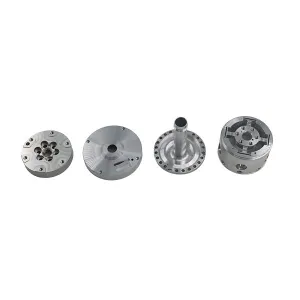
Humanoid robot articulated disc
Category: Humanoid robotBrowse number: 13Number:Release time: 2026-09-21 16:14:12The humanoid robot articulated disc is a precision mechanical component designed for robotic joint movement and flexible motion control. Manufactured with high accuracy and strict quality requirements, it provides stable performance, smooth operation, and reliable durability for humanoid robots, industrial robots, automation equipment, and advanced robotic systems.
News
Category:
No search results found!
Case
Category:
No search results found!
Video
Category:
No search results found!
Download
Category:
No search results found!
Job
Category:
No search results found!
Featured Products
No search results found!



 Phone
Phone