
 Español
 Pусский
 العربية
 Tiếng Việt
Semiconductor substrate
A semiconductor substrate is the foundational material on which integrated circuits and other electronic devices are built. It serves as the mechanical support and structural base for the layers of materials that form transistors, interconnects, and other circuit elements. Because nearly every electronic device depends on semiconductor substrates at some stage of manufacturing, the quality of the substrate has a direct impact on device performance, reliability, and yield.The most commonly used substrate material is silicon, valued for its excellent electrical properties, abundance, stability, and compatibility with mature fabrication processes. Silicon substrates are typically produced as single-crystal wafers, which provide a highly uniform surface suitable for precise microfabrication. Depending on the application, these wafers may be doped with specific impurities to control electrical conductivity. In addition to silicon, other materials such as silicon carbide, gallium arsenide, and sapphire are also used when special thermal, high-frequency, or optoelectronic properties are required.The manufacturing of a semiconductor substrate involves several highly controlled steps. First, raw material is purified to extremely high levels to remove contaminants. It is then formed into a single crystal using specialized crystal growth methods. After that, the crystal is sliced into thin wafers, polished to an atomically smooth finish, and inspected for defects. Even microscopic flaws such as dislocations, particles, or surface irregularities can affect chip performance, so substrate quality control is extremely strict.Semiconductor substrates must meet demanding requirements in terms of flatness, thickness uniformity, crystal orientation, resistivity, and purity. A flat and uniform surface enables accurate pattern transfer during photolithography, while high purity minimizes unwanted electrical leakage and contamination. Mechanical strength is also important, since the wafer must withstand multiple processing steps such as heating, etching, deposition, and ion implantation.The choice of substrate material depends on the intended application. For digital logic and memory devices, silicon remains the dominant choice because it supports high-volume production and cost efficiency. For power electronics, materials with greater thermal conductivity and wider bandgap may be preferred. For radio frequency and optical devices, substrates with superior electron mobility or light-handling characteristics are often selected.As semiconductor devices continue to become smaller, faster, and more energy efficient, the role of the substrate becomes even more critical. Advances in substrate engineering help improve chip performance, reduce power consumption, and support new technologies in computing, communication, automotive systems, and consumer electronics. In this sense, the semiconductor substrate is not just a passive base, but a key enabler of modern electronics.
Products
Category:
-
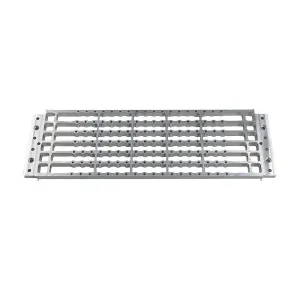
Semiconductor substrate
Category: SemiconductorBrowse number: 18Number:Release time: 2026-09-21 15:28:38Semiconductor substrate is a critical foundation material used in chip manufacturing and advanced electronic devices. Designed with high precision, excellent stability, and reliable performance, semiconductor substrates support wafer processing, integrated circuits, and electronic applications. High-quality substrate solutions help improve device performance, manufacturing efficiency, and product reliability across modern semiconductor industries.
News
Category:
No search results found!
Case
Category:
No search results found!
Video
Category:
No search results found!
Download
Category:
No search results found!
Job
Category:
No search results found!
Featured Products
No search results found!



 Phone
Phone